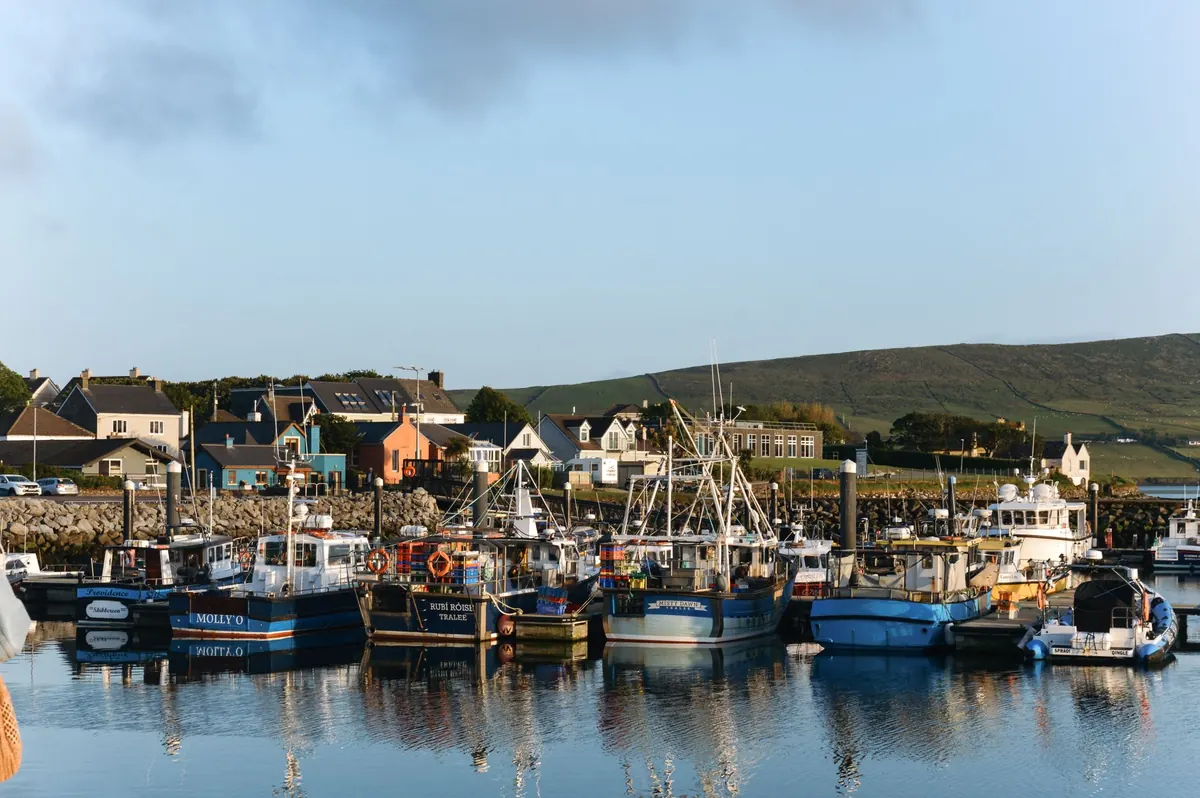
The first time you walk into a working fishing village, it is easy to get it wrong without noticing. You arrive at midday, the harbour looks empty, the boats are shut up, and the only sound is a dog barking somewhere behind a shutter. You take a few photos, buy an ice cream, and leave thinking it was charming but quiet. Then someone tells you later that the whole village wakes at four in the morning, that the boats came in at six, that the fish was sold and gone by nine, and that the good table by the water was full of fishermen eating lunch by half past twelve. You missed all of it.
These villages are not museums. They keep working hours, and those hours shape everything worth seeing. Learn the rhythm and a short visit becomes something much better than a photo stop.
Understand the rhythm before you plan the day
Most small harbours along the bay run on a split schedule. The night boats come in around first light, sometimes earlier. The quay is busy, noisy, and not especially interested in visitors. By mid-morning the catch has been landed, sorted, and moved on; the ice is being hosed off the concrete, the crates are stacked, and the pace drops. Then things go quiet. Shutters close. The village sleeps through the hot hours and comes back to life in the late afternoon, when the light softens, the boats are cleaned and checked, and people sit outside again.
That gives you two genuinely good windows. Early morning, if you can manage it, is the most alive and the most rewarding. Late afternoon into evening is easier, gentler, and better for eating. The middle of the day is for swimming, reading, or a long lunch — not for touring a harbour.
- Early (roughly first light to mid-morning): boats landing, ice, crates, diesel, raised voices, real work. Watch from a distance.
- Midday: closed shutters and empty quays. Don't read this as "nothing here".
- Late afternoon: repairs, nets, washing down, children on the slipway. Good for wandering.
- Evening: the best time to eat, and the best light for photographs.
Check the tide as well as the clock. A harbour that looks like a shallow puddle at eleven in the morning can be full and reflective by six, and a slipway that is dry when you walk down it may not be dry when you walk back.
Arriving without a car, or with one
Many of these villages were built before anyone imagined a car arriving in them. That is part of their charm and all of the parking problem. Streets are narrow, often one vehicle wide, sometimes with a bend that a delivery van takes in two movements. If you are driving, park outside the centre and walk in. The ten minutes on foot are usually the nicest part of the visit anyway.
If you come by boat, arrive slowly and respect the marked channels. The swimming area is often right beside the entrance, which surprises people. If you come by bus or on foot along the coastal path, you will see more: the drying racks, the small shrines, the cats, the old men who have clearly been sitting on the same wall since the 1970s.
What to bring
Flat shoes with some grip, because harbour concrete is uneven and often wet. A hat and water, because shade is scarce on a quay. Cash in small notes, because the little shop or the man selling fruit from a table may not take a card. A bag for anything you buy, since nobody wants to hand you a plastic one.
Harbour etiquette, in plain terms
Fishermen are generally friendlier than their reputation suggests, but they are at work, and a working quay is a small factory floor. The single most useful rule is simple: if something looks like it belongs to the job, don't touch it, stand on it, or lean against it. Nets, ropes, floats, crates, engines, and the boats themselves are equipment, not props.
Ask before photographing people close up. A nod towards the camera and a raised eyebrow does the job where you don't share a language. If the answer is a shake of the head, smile and move on. Photographing a boat or a pile of nets from the public quay is a different matter and generally fine. Photographing somebody's face from a metre away is not.
Keep children and dogs off the mooring lines and away from the slipway edge. Don't swim in the harbour mouth or between moored boats — that is the one place where a swimmer and a propeller can meet, and it happens more easily than people expect. Use the beach.
If you would not walk into the back room of a workshop in your own town and start rearranging things, don't do it on a quay.
What to eat, and how to order it
The food is the reason many people come back. But the best meals in these villages are not always in the places with the biggest signs. A few things hold true almost everywhere.
Eat what is landed, not what you came hoping for. If the board lists something as catch of the day, ask what it is and where it came from. A good kitchen will tell you readily. If everything on a long menu is available every day of the year, that menu has probably travelled further than you have.
- Go for the small place with a short menu, six tables, and a handwritten board.
- Order the fish simply grilled or baked, with olive oil and lemon. It is the local test of a kitchen.
- Ask for the house white and the local bread. Both are usually modest and good.
- Book for dinner in summer, or arrive early and accept a wait with a drink outside.
- Skip the imported seafood classics. You are at the source of something better.
Lunch runs late and takes time. If you sit down at half past twelve expecting to be back at two, you will be disappointed. Order a coffee afterwards, sit for another twenty minutes, and let the afternoon close around you.
Sightseeing with some restraint
These villages are lived in all year, and in summer the population can multiply in a way that puts real strain on narrow streets, water, and bins. You are a guest in a place that is also somebody's home and somebody's workplace. That is a low bar, but it is worth stating.
Walk in the middle hours if you want the streets to yourself, but accept that shutters will be closed. Keep your voice down in the alleys in the early afternoon and late at night. Don't block a doorway to take a photo of a wall. Buy something from the village — bread, fruit, a coffee, a beer, a postcard — because a place that earns from visitors tends to stay a place rather than becoming a backdrop.
Reading a village in an hour
If you only have a short time, do this: walk to the harbour first, find the slipway, and look back at the village from the water's edge. That view tells you how the place was built — the houses turned away from the sea, the church up high, the boats pulled up where the ground is flattest. Then walk one street back from the waterfront, where the real life is. Then sit somewhere with a view and do nothing for ten minutes. That is usually the part people remember.
Practical notes for your visit
Go early or go late. Park outside the centre. Wear shoes that can handle wet concrete. Don't touch the gear, don't swim in the harbour mouth, and ask before photographing faces. Eat the short menu and the fish that was landed this morning. Carry small cash, drink more water than you think you need, and keep your voice low in the alleys after dark.
A final note on timing: the shoulder months, when the water is still warm and the crowds have gone, are often the best time to see these villages as they actually are. Boats still go out, tables are easier to get, and the people who work the harbour have a moment to talk. If you are staying nearby, ask at the desk which village is worth the short drive on the day you plan to go — the answer changes with the weather, the season, and which boats are in.
And if a fisherman waves you off a patch of quay, don't take it personally. Step back, watch from a few metres away, and you will see more than you would have done standing in the way.
Photo: Anna Lupa / Pexels